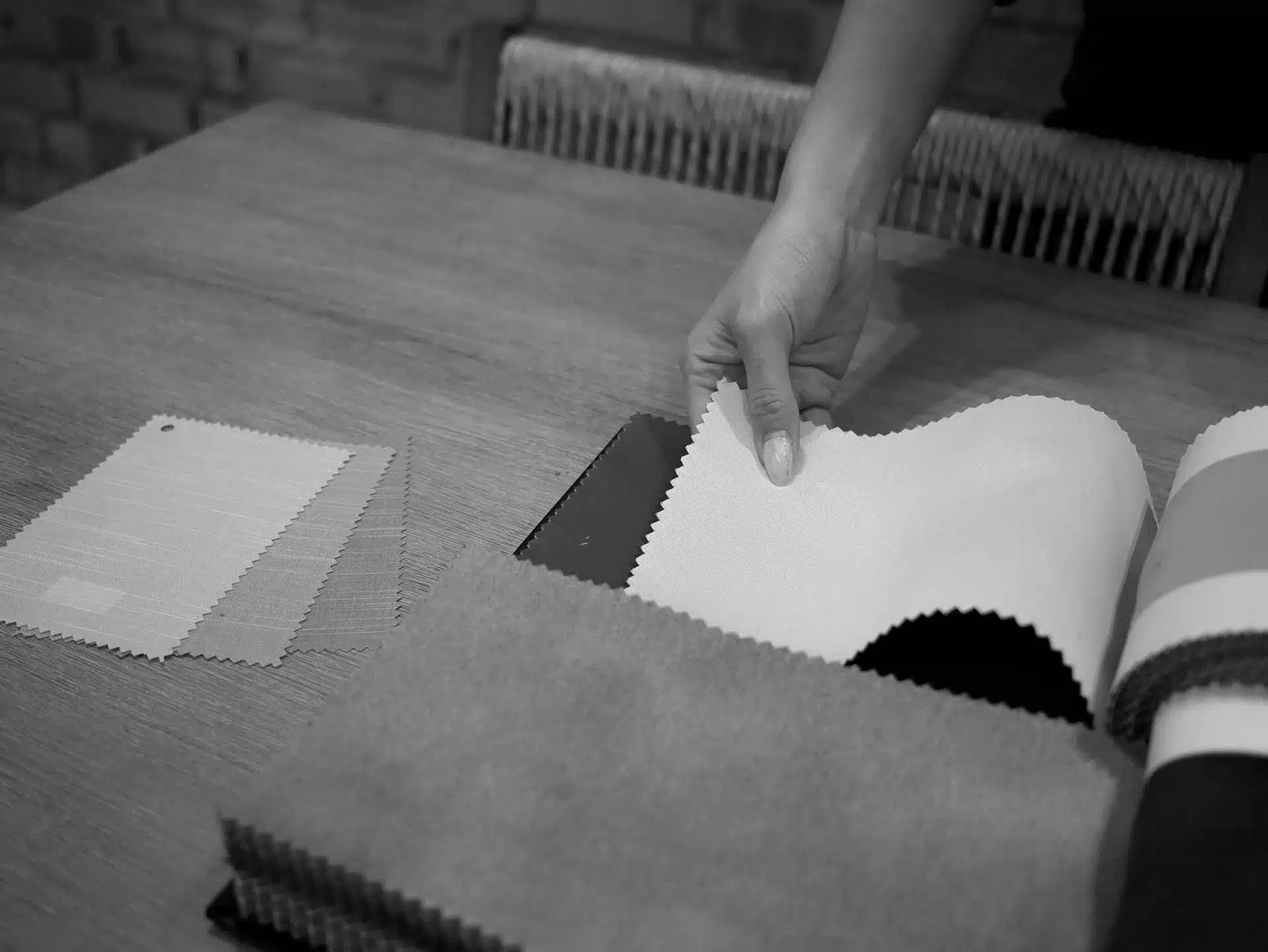
Vertical Blinds
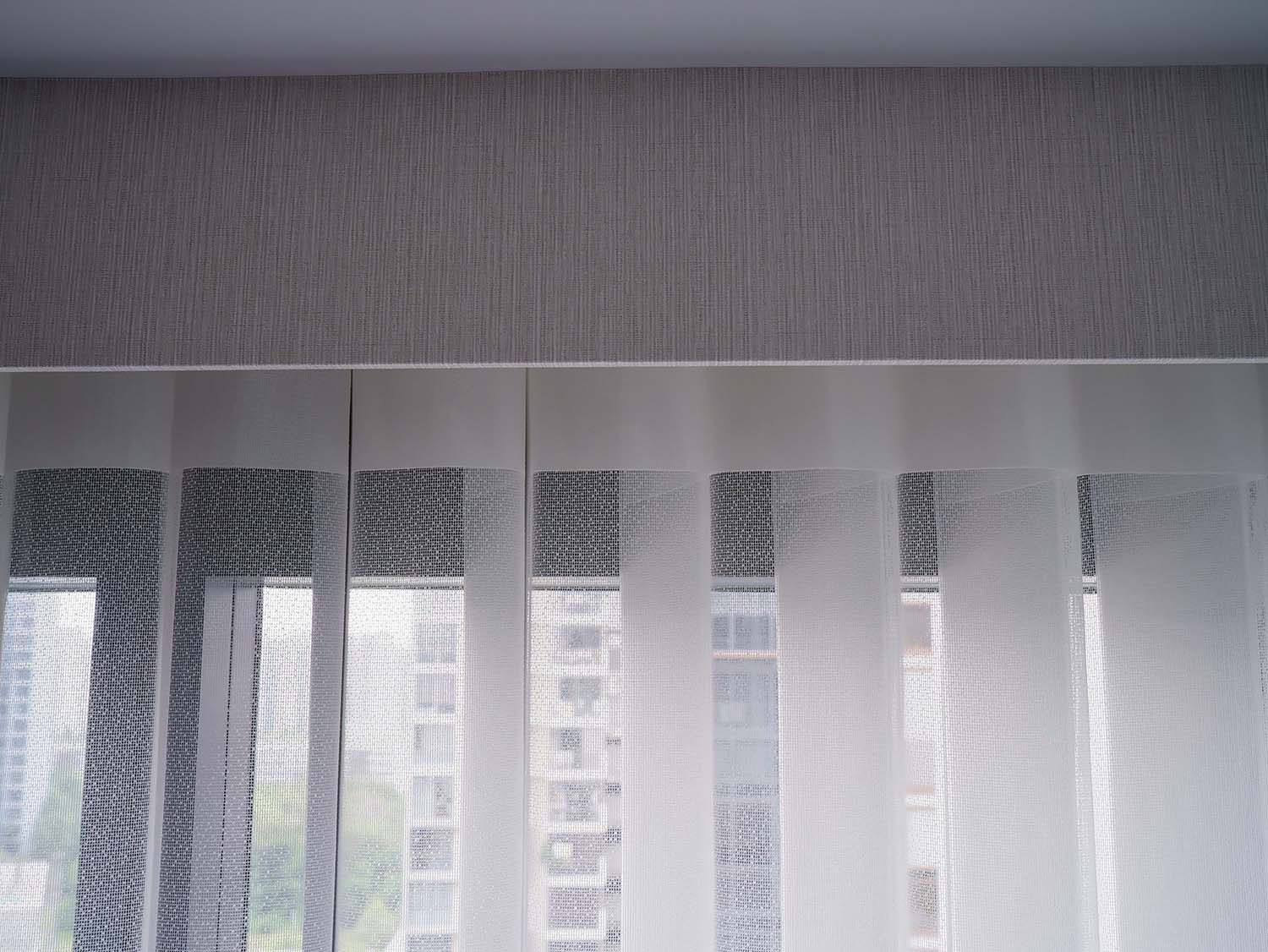
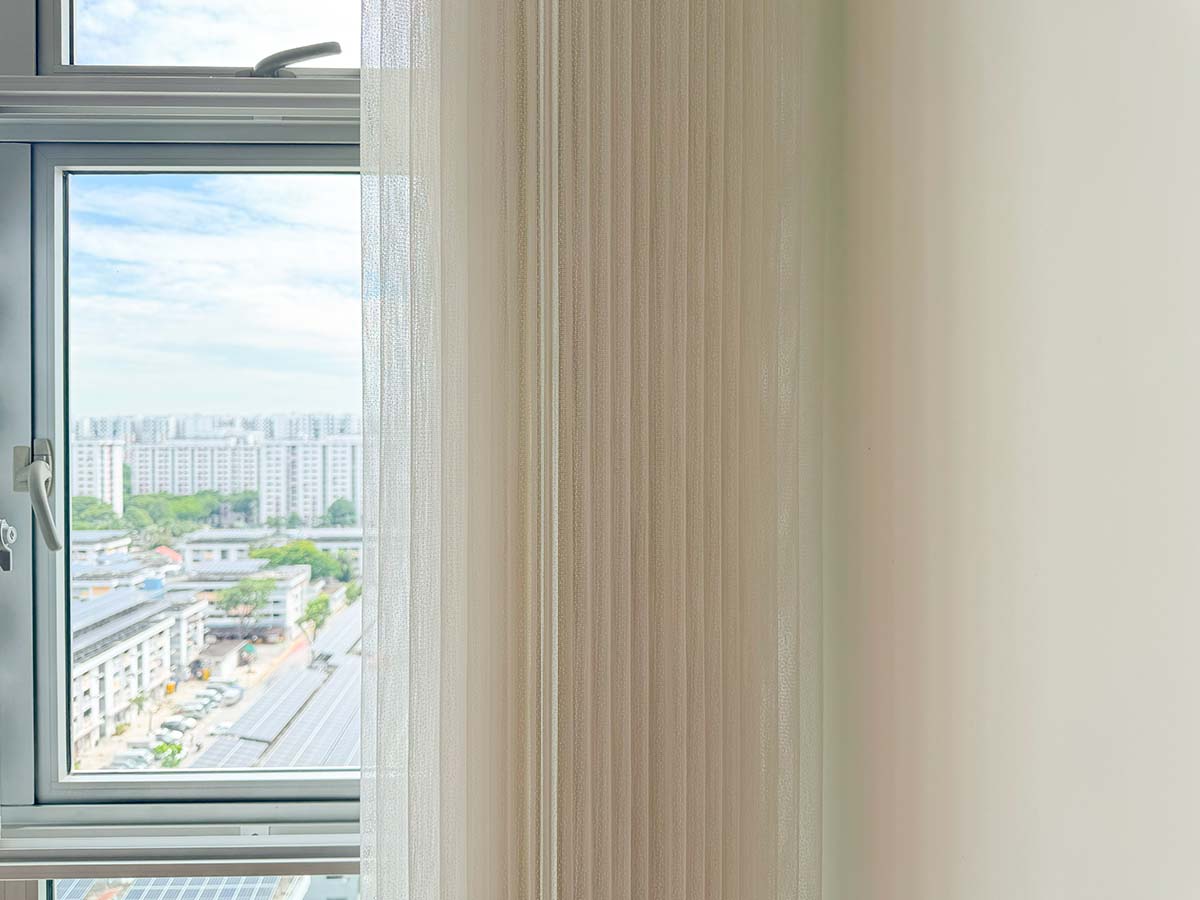
Vertical Blinds use rotating fabric vanes that hang from a top track, often paired with a sheer backing layer for soft, two-mode light control.
They handle the wide sliding doors and balcony openings common in Singapore condos better than venetian or roller systems, and draw across the track like a curtain when fully open. The vanes rotate independently, letting you direct, filter, or block light without operating the entire blind.
Vertical blinds with an integrated sheer layer are also referred to as vertical sheers, ripple curtains, or dream blinds.
Properties
Suited to Wide Spans
Vanes traverse along a top track like a curtain, handling the wide sliding doors and balcony openings common in Singapore condos better than venetian or roller systems.
Two-Layer Light Control
Most modern vertical blinds combine opaque vanes with a sheer backing layer. Soft daytime light when open, clean privacy when closed.
Rotating Vanes
Each vane rotates independently, letting you direct or filter incoming light without raising or moving the blind across the track.
Compact Stack at One End
Stacks tightly at one or both ends of the track when fully drawn open, leaving the door or window unobstructed.
Vertical Blinds in Singapore Homes
Sliding Doors and Balcony Openings
Most condo apartments in Singapore include a sliding glass door opening onto a balcony or service yard, often spanning 2.4 to 3.6 metres. Vertical blinds are particularly suited to these openings: the vanes traverse the entire span on a single track and stack compactly to one side when fully open, leaving the doorway clear. Roller blinds become unwieldy at these widths, and venetian blinds tend to sag.
HDB Living-Room Windows
HDB living-room windows are typically casement aluminium types ranging from 1.8 to 2.4 metres wide. Vertical blinds suit these wider rectangular openings, particularly where a soft sheer-layer effect is wanted alongside daytime privacy.
Two-Mode Operation
With the vanes open, the sheer backing layer filters daylight into the room. With the vanes rotated closed, the opaque or dimout fabric provides privacy and reduces glare. The horizontal-traverse mechanism makes vertical blinds the best choice for very wide windows and sliding doors, where roller- style alternatives become unwieldy.
Fabric Configurations
Blackout with Sheer Layer
Opaque vanes block most external light when closed; the sheer backing layer filters daylight when the vanes are open. The standard layered configuration for living rooms and master bedrooms.
Dimout with Sheer Layer
Vanes reduce glare and provide strong daytime privacy without darkening the room. The sheer backing softens light when the vanes are open. A balanced choice for living and dining areas.
Opaque (No Sheer)
Solid opaque vanes only, no sheer layer. A simpler, more traditional configuration suited to home offices, utility rooms, or minimalist interiors that do not need the layered effect.
Climate Considerations
West-Facing Sliding Doors
Many Singapore condos are oriented so that one face takes direct afternoon sun. Where this face includes a sliding door, vertical blinds with a dimout or blackout vane plus sheer layer let you cut glare and heat in the afternoon while preserving the layered sheer look in the morning.
Humidity and Vane Care
Polyester-blend vanes used in our range hold their shape in Singapore's 70 to 90 percent year-round humidity and do not absorb moisture the way heavier curtain fabrics can. Routine cleaning is a wipe-down with a damp cloth or vacuum on a low setting; the vanes can be removed individually for deeper cleaning if needed.
Choosing Vertical Blinds for Specific Rooms
Living Room with a Sliding Door
The most common application. Dimout-with-sheer or blackout-with- sheer vertical blinds give you both daytime softness and evening privacy on a single mechanism that handles the full span without sagging.
Wide Living-Room Windows
For rectangular HDB living-room windows wider than about 2 metres, vertical blinds are often a cleaner solution than splitting the span between multiple roller or venetian blinds. The traverse mechanism keeps the look continuous.
Home Office
Opaque-only vertical blinds (without sheer) suit home offices where a simpler, more functional treatment is preferred. The rotating vanes let you cut monitor glare without raising the blind.
Bedroom
Less common in bedrooms because verticals do not seal as tightly as a blackout curtain or roller blind, so a small amount of light leaks between vanes even when closed. They can work as a layered system alongside a blackout treatment, but blackout curtains or roller blinds are the more typical bedroom choice.
Installation in HDB and Condo Contexts
Track Mounting Above Sliding Doors
For sliding-door installations, the track is usually wall-mounted above the door frame or recessed into a false-ceiling pelmet. Allow at least 100 millimetres of pelmet depth for a single track, more if a curtain layer is being added in front. The track length typically extends 100 to 200 millimetres beyond the door opening on the stack side, so the vanes clear the doorway when fully drawn open.
Stacking Direction
Vertical blinds can stack to one side or split-stack to both ends of the track. The choice depends on which side of the sliding door is in active use and where the open vanes will be least obtrusive. This is decided during measurement and affects both the track length and the layout of the vanes.
Power for Motorisation
Motorised vertical blinds need a 230V power point near one end of the track. For wide sliding-door installations, motorisation is increasingly common because manual traverse on long tracks can be heavy. Plan the power point during the renovation electrical phase if possible.
When Should You Choose Vertical Blinds?
Vertical Over Other Blinds
Vertical blinds are the right choice for sliding doors, very wide windows, and openings where the treatment needs to traverse horizontally. Roller and venetian blinds become impractical or visually awkward at those widths.
Vertical Blinds Over Curtains
Compared with a sheer-plus-blackout layered curtain system, vertical blinds use a single mechanism instead of two tracks, giving a slimmer head-rail profile. Curtains still win on visual softness and full-blackout sealing, which is why bedrooms more often use curtains than vertical blinds.
When Vertical Blinds Are Not the Best Fit
Vertical blinds do not provide a true blackout effect. They are also less suited to small or narrow windows, where the vanes lose their visual rhythm. For bedrooms, AV rooms, and any space where consistent darkness matters, a blackout curtain or roller blind is the better choice.
Read more in our guide
More on choosing between blind types and fabric configurations.
Ready to visit?
- ✓Experience our fabrics – feel and see how they move in natural light.
- ✓Explore full-sized curtains and blinds in a real setting.
- ✓Try out motorized and smart systems before you decide.
- ✓Get personalised advice from our team.
- ✓Discover combinations that work for your space, lighting, and style.