Venetian Blinds
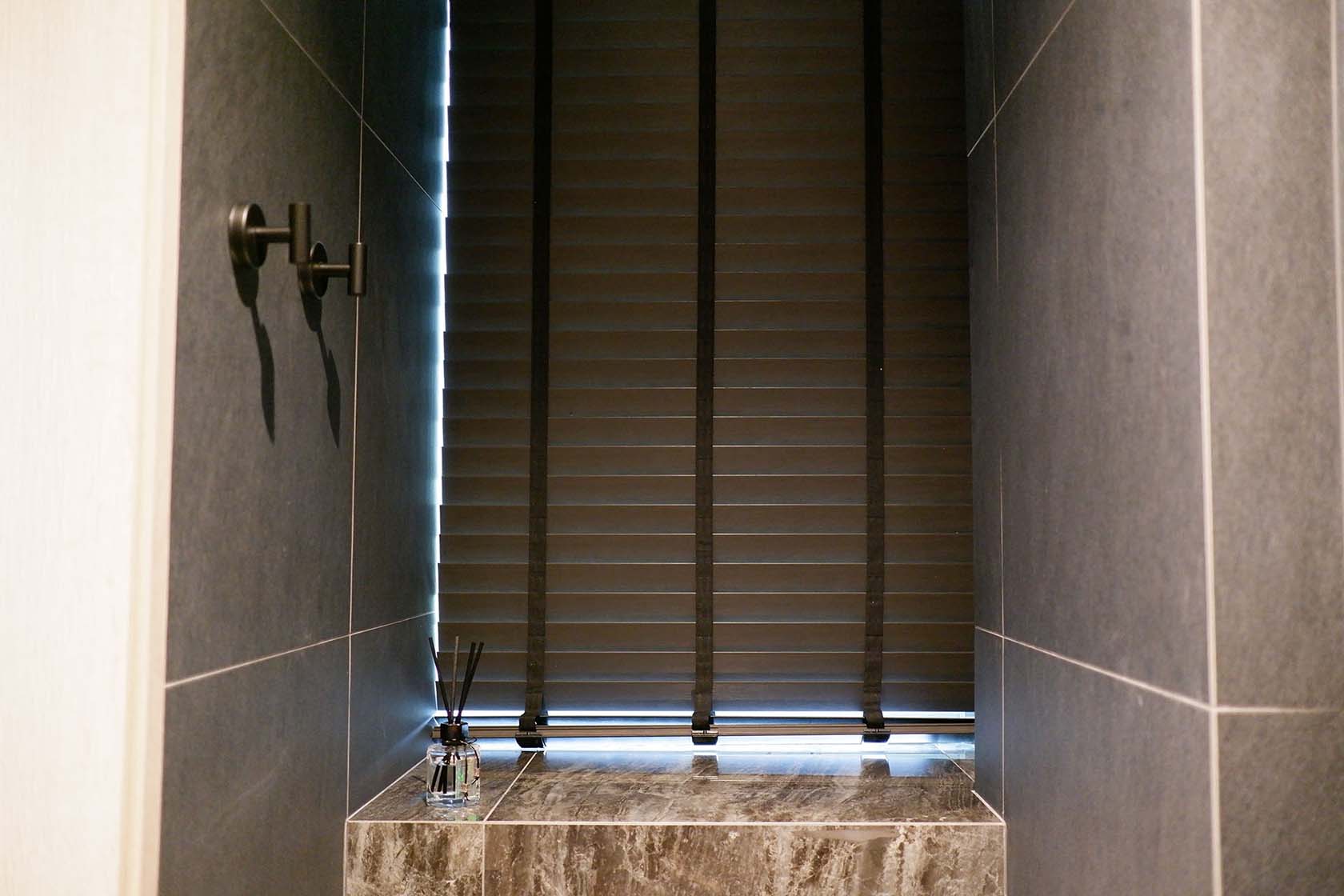
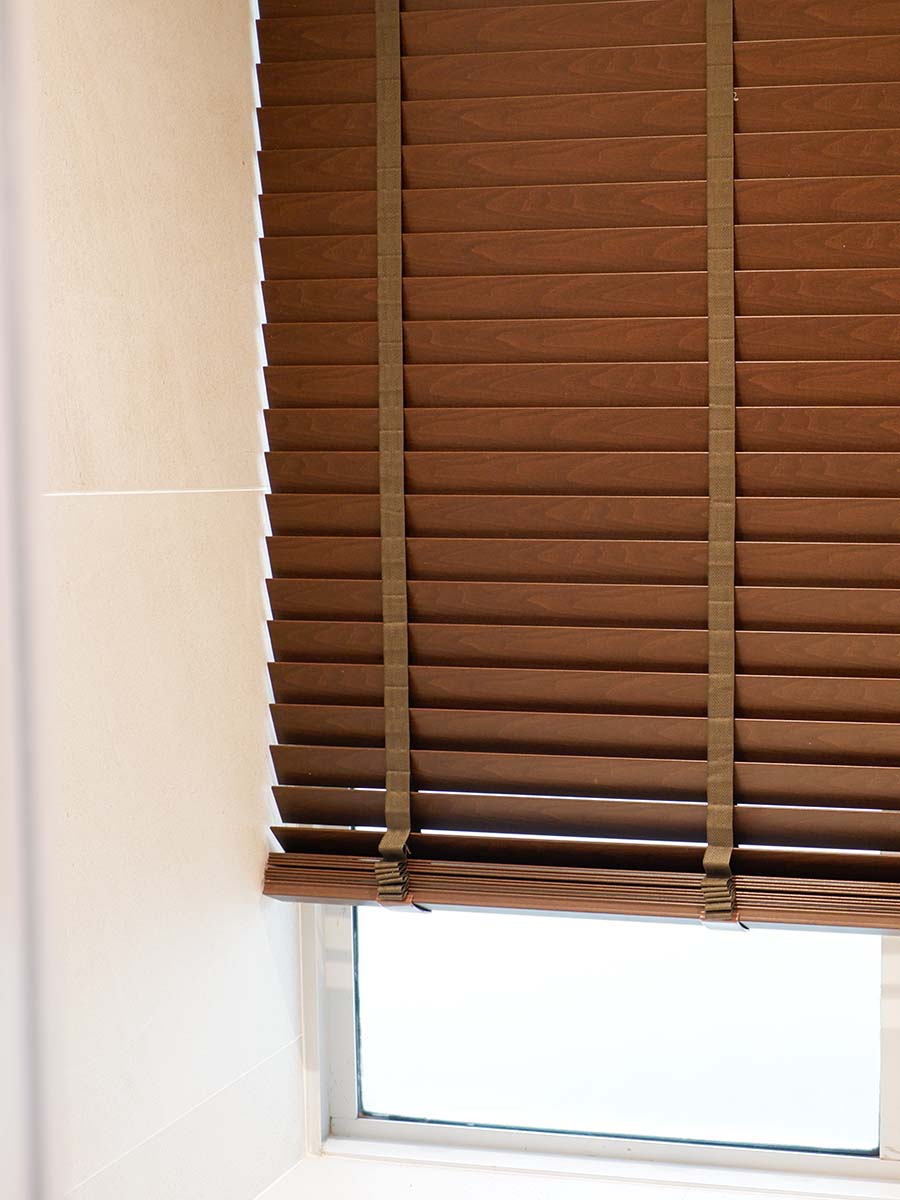
Venetian Blinds use horizontal slats that tilt or raise, giving fine control over light angle and privacy without needing to operate the entire blind.
The slats can be angled to redirect afternoon sun, closed for full privacy, or fully raised so the entire blind stacks compactly at the top of the window. The horizontal orientation gives a crisp, structured look that suits studies, home offices, kitchens, and Balinese, colonial, or Scandinavian interiors.
Venetian blinds are sometimes referred to as horizontal blinds.
Properties
Adjustable Slat Angles
Tilt the slats to direct, diffuse, or block light without having to raise or lower the blind. Useful for managing afternoon sun without losing the view.
Compact When Raised
Stacks tightly at the top of the window, leaving the recess clear. Suits HDB windows with deep sills or where furniture sits close to the wall.
Choice of Materials
Aluminium, faux wood (PVC), and real timber. Material choice trades off cost, weight, and how the blind ages in Singapore’s humidity.
Easy to Clean
Slats wipe down with a damp cloth. No fabric folds to gather dust or trap cooking residue, which makes venetians practical in kitchens and study rooms.
Venetian Blinds in Singapore Homes
HDB Recess Mounting
Most HDB BTO and resale flat windows are casement aluminium types set into a recess. Venetian blinds are usually mounted inside this recess, sitting flush with the wall. The slim head rail (typically 25 to 35 millimetres) fits without needing a deep recess, which makes venetians one of the easier blind systems to retrofit on existing windows without renovation work.
Choosing the Right Material for Singapore
Material choice carries the most weight here. Aluminium and faux wood slats handle Singapore's humidity (typically 70 to 90 percent year-round) without warping or swelling, and are the default for kitchens, bathrooms, and service yards. Real timber looks the most premium but is sensitive to humidity and direct sun, so it is generally avoided in those rooms and in consistently west-facing windows.
Tilt Control for Equatorial Sun
Singapore's sun moves close to overhead through the day, with strong direct light through east-facing windows in the morning and west-facing windows in the late afternoon. Venetian slats can be angled upward to bounce light off the ceiling, keeping rooms bright but cutting the glare and heat that hits seating areas or screens.
Material Options
Aluminium
Lightweight, slim slats (typically 25mm) that handle humidity and direct sun without warping. The most cost-effective option and the standard choice for service yards and bathrooms.
Faux Wood (PVC)
PVC slats finished with a wood-grain look. Heavier than aluminium and more substantial visually, but does not warp or absorb moisture like real timber. Common in living rooms wanting a wood look without the maintenance.
Real Timber
Genuine wood slats with the warmth and grain that PVC can only approximate. The most premium option, but requires more care in Singapore’s humidity and is best avoided in kitchens, bathrooms, and consistently sun-exposed windows.
Choosing Venetian Blinds for Specific Rooms
Study and Home Office
One of the most common applications. Aluminium or faux wood venetians let you angle the slats to cut monitor glare without losing the view entirely. The structured horizontal lines also suit the visual language of a workspace.
Kitchen and Bathroom
Aluminium venetians are the practical default. They handle steam, cooking moisture, and bathroom condensation without warping, and wipe clean easily. PVC faux wood works too where a softer look is preferred. Real timber is generally not recommended for these rooms.
Living Room
Faux wood or real timber venetians suit living rooms designed around a Balinese, colonial, or Scandinavian aesthetic. For full-width living-room windows or sliding doors, vertical blinds or curtains are usually a better fit, since wide venetian blinds can sag at the centre over time.
Bedroom
Less common in bedrooms because venetians do not provide the full blackout effect needed for sleep. They can work as a secondary layer alongside a blackout curtain, but blackout curtains or roller blinds are the more typical bedroom choice.
Installation in HDB and Condo Contexts
Inside-Recess Fit
Inside-recess mounting is the most common HDB choice. The blind sits flush with the recess, leaving the wall around the window uncluttered. Recess depth needs to clear the head rail and the stacked slats when fully raised, typically requiring about 50 to 70 millimetres of clearance.
Width Limits and Multi-Blind Setups
Venetian blinds wider than about 2 metres can sag at the centre and become harder to operate manually. For wide condo living-room windows or sliding doors, the typical solution is to split the span into two or three blinds under a shared head rail cover. Vertical blinds or a layered curtain system is often a better fit at those widths.
Wall Anchoring
HDB concrete walls hold venetian brackets without issue. In condo units with partition walling around the window opening, brackets need to be anchored into the structural opening rather than the partition itself.
When Should You Choose Venetian Blinds?
Venetian Over Curtains
Venetian blinds suit spaces where a structured, low-profile look is wanted, where furniture sits close to the window, or where wipe-clean maintenance matters. Curtains still win on softness, on full blackout, and on full-height drape, which matters in bedrooms and main living rooms designed around fabric texture.
Venetian Over Other Blinds
Compared with roller blinds, venetians give you slat-angle control without raising or lowering the whole blind. Compared with vertical blinds, venetians work better on standard rectangular HDB windows; verticals are usually preferred on sliding doors and very wide spans.
When Venetian Blinds Are Not the Best Fit
Venetians do not produce a full blackout effect, since light leaks between the slats even when fully closed. They are also less suited to very wide windows (above about 2 metres standalone) and to bedrooms where consistent darkness is the priority.
Read more in our guide
Compare venetian blinds with other systems and material options.
Ready to visit?
- ✓Experience our fabrics – feel and see how they move in natural light.
- ✓Explore full-sized curtains and blinds in a real setting.
- ✓Try out motorized and smart systems before you decide.
- ✓Get personalised advice from our team.
- ✓Discover combinations that work for your space, lighting, and style.