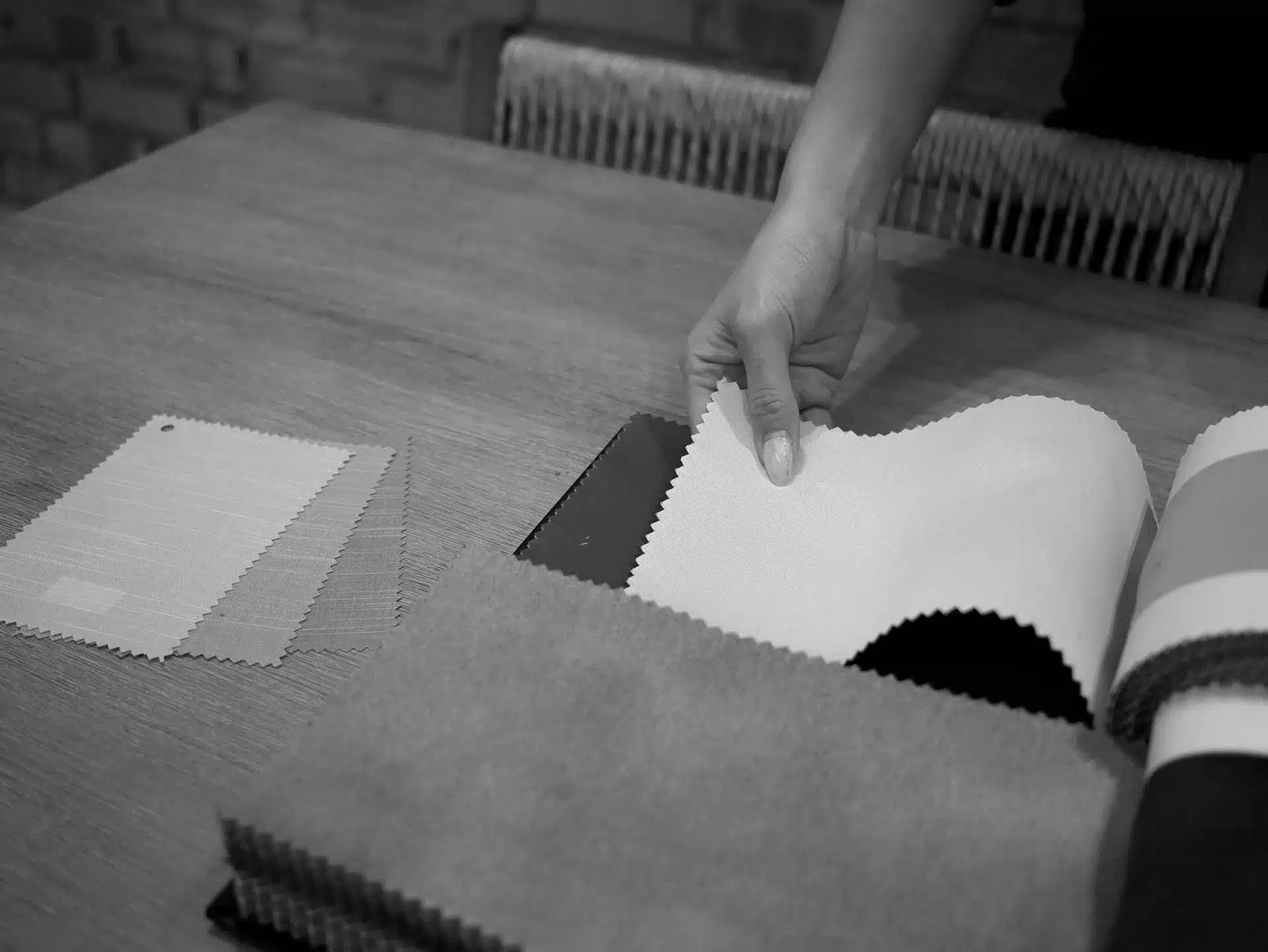
S-Fold Curtains
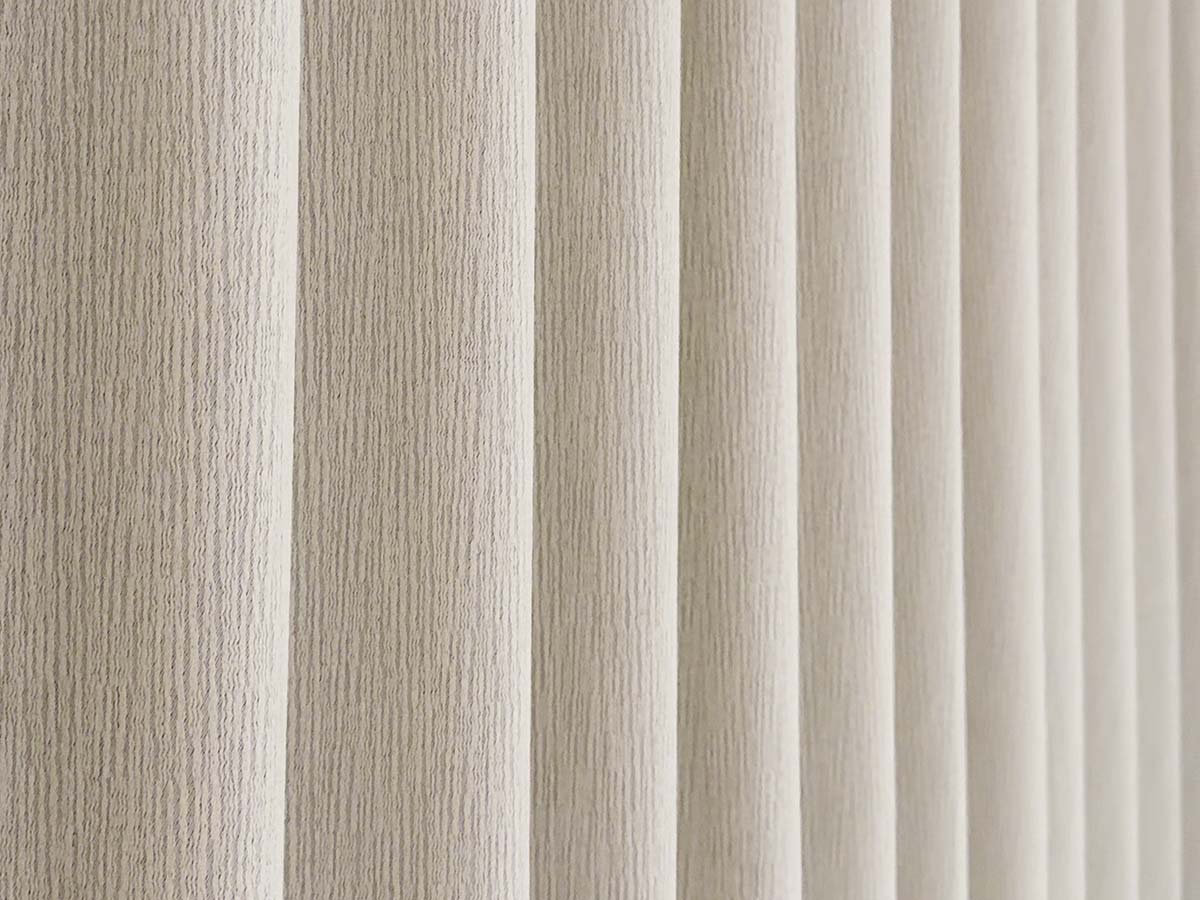
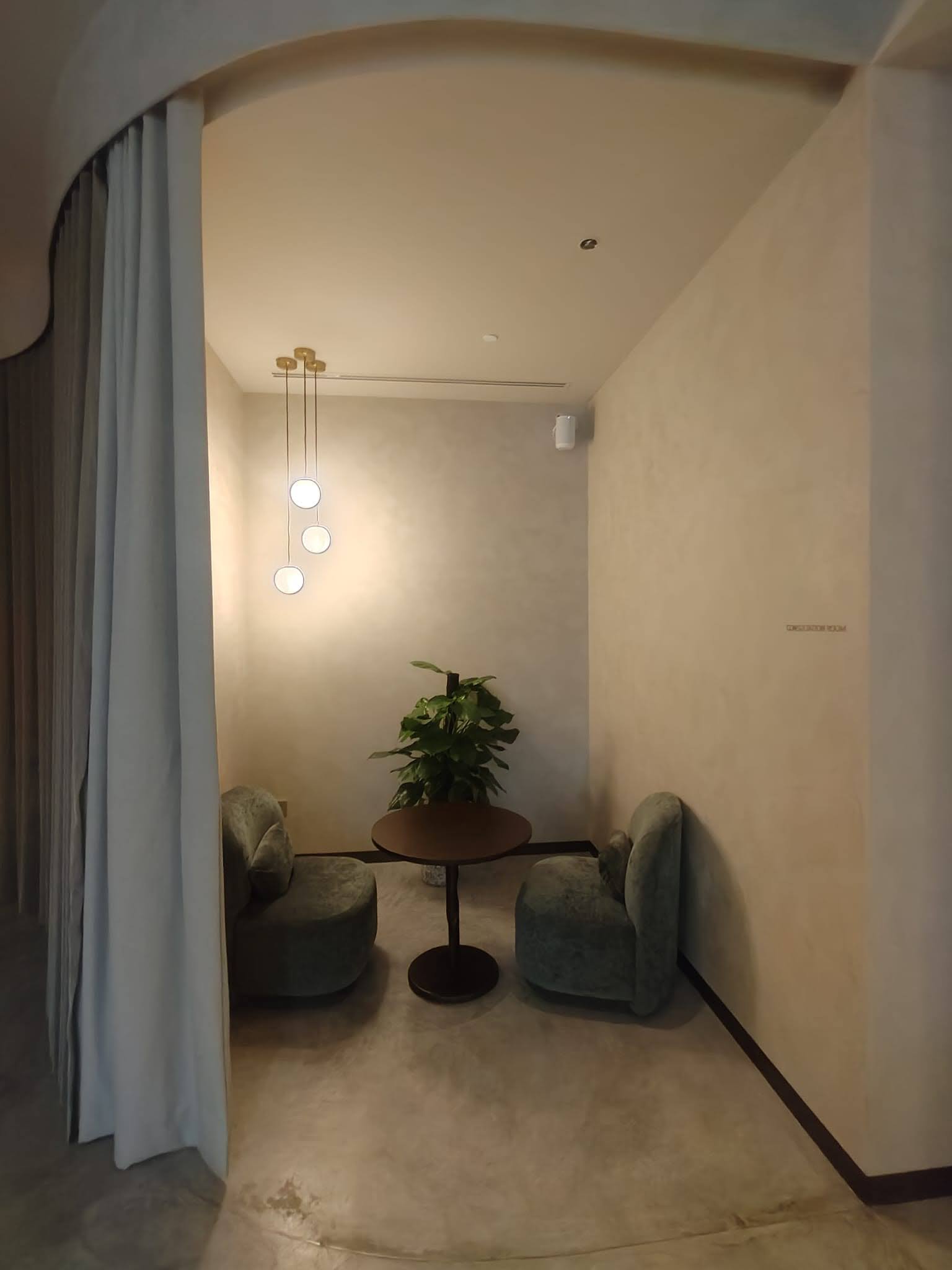
S-Fold Curtains use a track-mounted carrier system that holds fabric in soft, continuous waves from top to bottom.
Compared with traditional pleated curtains, they take up less space when drawn open, hang in a more uniform shape, and lend a cleaner profile to modern interiors. They are increasingly the default curtain choice in new HDB BTO and condo renovations in Singapore.
S-Fold curtains are also known as S-Pleat Curtains, Ripple Fold Curtains, or Wave Curtains.
Properties
Soft, Continuous Curves
Track-mounted carriers spaced at fixed intervals hold the fabric in uniform waves whether the curtain is drawn open or closed.
Compact Stack-Back
Typical stack-back is around 12–15% of the rod width when fully open — less than double-pleat curtains, which can stack at 18–25%.
Suits Singapore Ceiling Heights
Works cleanly with the standard ~2.6m HDB ceiling and most condo heights. Mounted close to the ceiling, the panels read as full-height drapes.
Modern, Architectural Look
The continuous wave profile suits clean-lined HDB BTOs, condo apartments, and contemporary landed homes that lean towards minimalist finishes.
S-Fold Curtains in Singapore Homes
Ceiling Heights and Track Placement
HDB flats built from the 1990s onwards typically have an internal ceiling height of around 2.6 metres. Older flats may be closer to 2.4 metres, and condominium developments vary, with most modern units between 2.7 and 3.1 metres. S-Fold tracks are usually ceiling-mounted directly above the window or recessed into a false ceiling, with the curtain hanging the full height for a built-in look.
For finished pelmet recesses, a track depth allowance of around 150 millimetres is standard for S-Fold systems. This needs to be communicated to your interior designer or contractor before the false ceiling is built, since retrofitting a recess is invasive work.
Stack-Back and Window Width
When fully drawn open, S-Fold curtains gather into a compact stack at one or both ends of the track. Typical stack-back is roughly 12 to 15 percent of the total rod width. For a 3-metre living-room window with curtains running track-to- track, that means around 35 to 45 centimetres of stack at one side, or half that at each end of a centre-opening pair.
This matters in HDB layouts, where windows often sit close to a corner wall or beside a balcony door. To preserve the full window opening when the curtain is drawn back, the track is usually extended beyond the window frame by a similar margin so the stack does not block daylight or the view.
Layered Day and Night Curtains
For Singapore bedrooms, S-Fold is most commonly installed as a two-track layered system: a sheer day curtain in front and a blackout night curtain behind. The day curtain manages light and privacy during the day, while the blackout layer takes over for sleep. The double-track system requires roughly 150 to 200 millimetres of pelmet depth depending on the bracket profile.
Fabric Options
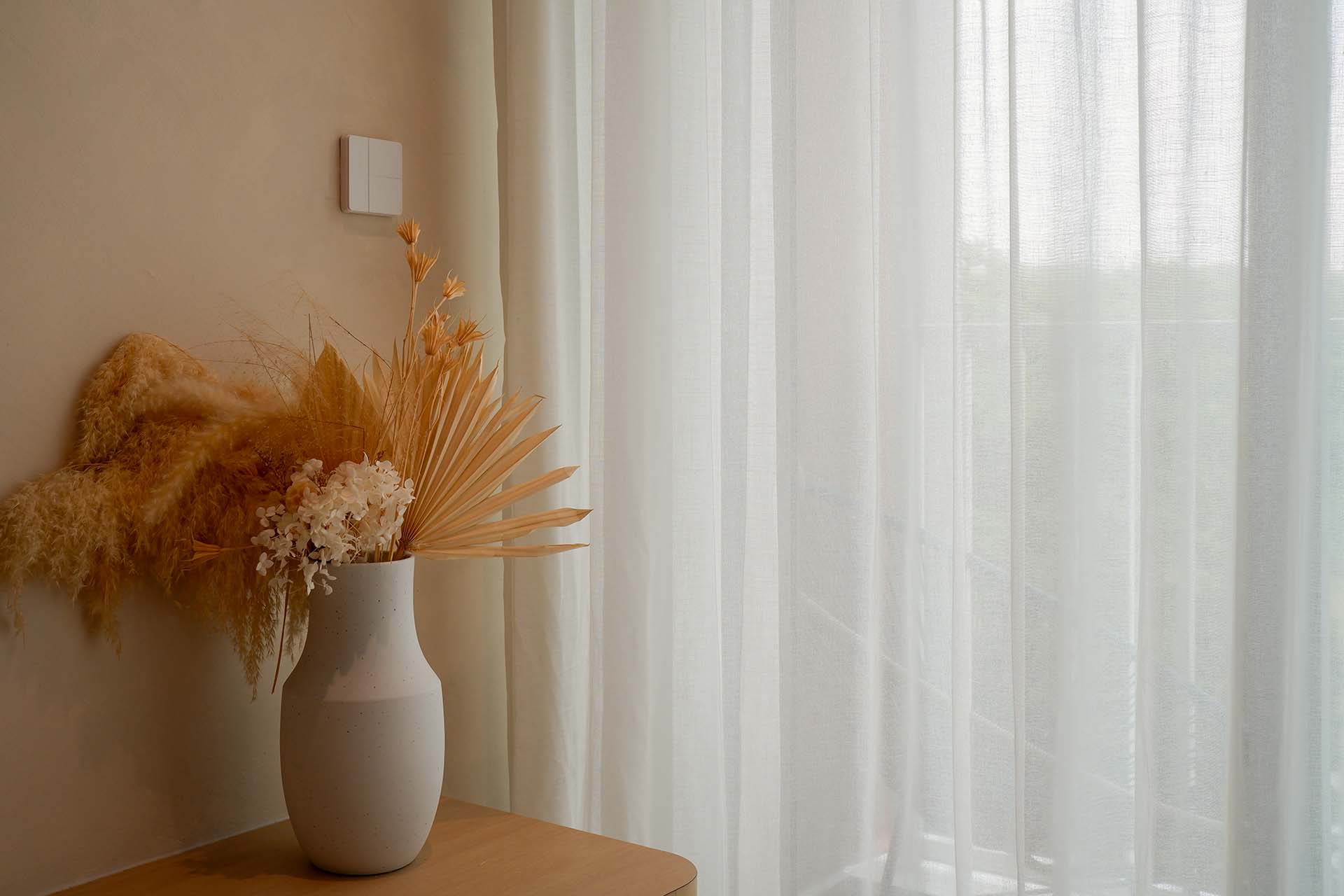
Sheer
Light, translucent fabric that filters daylight and offers daytime privacy. Common as the day layer in a layered bedroom or living-room system.
Dimout
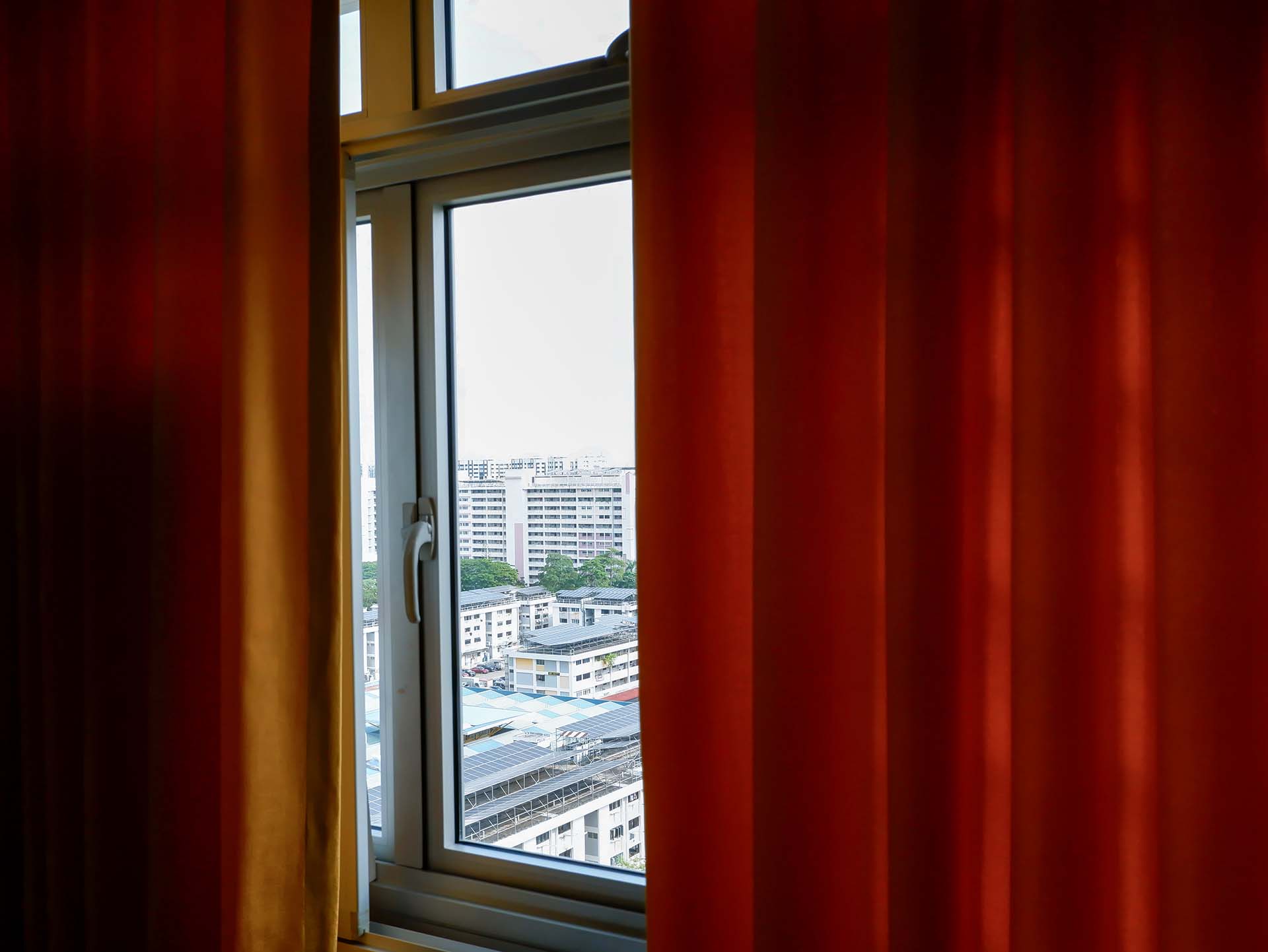
Medium-weight fabric that reduces glare and gives stronger privacy without darkening the room. A balanced choice for living and dining areas.
Blackout
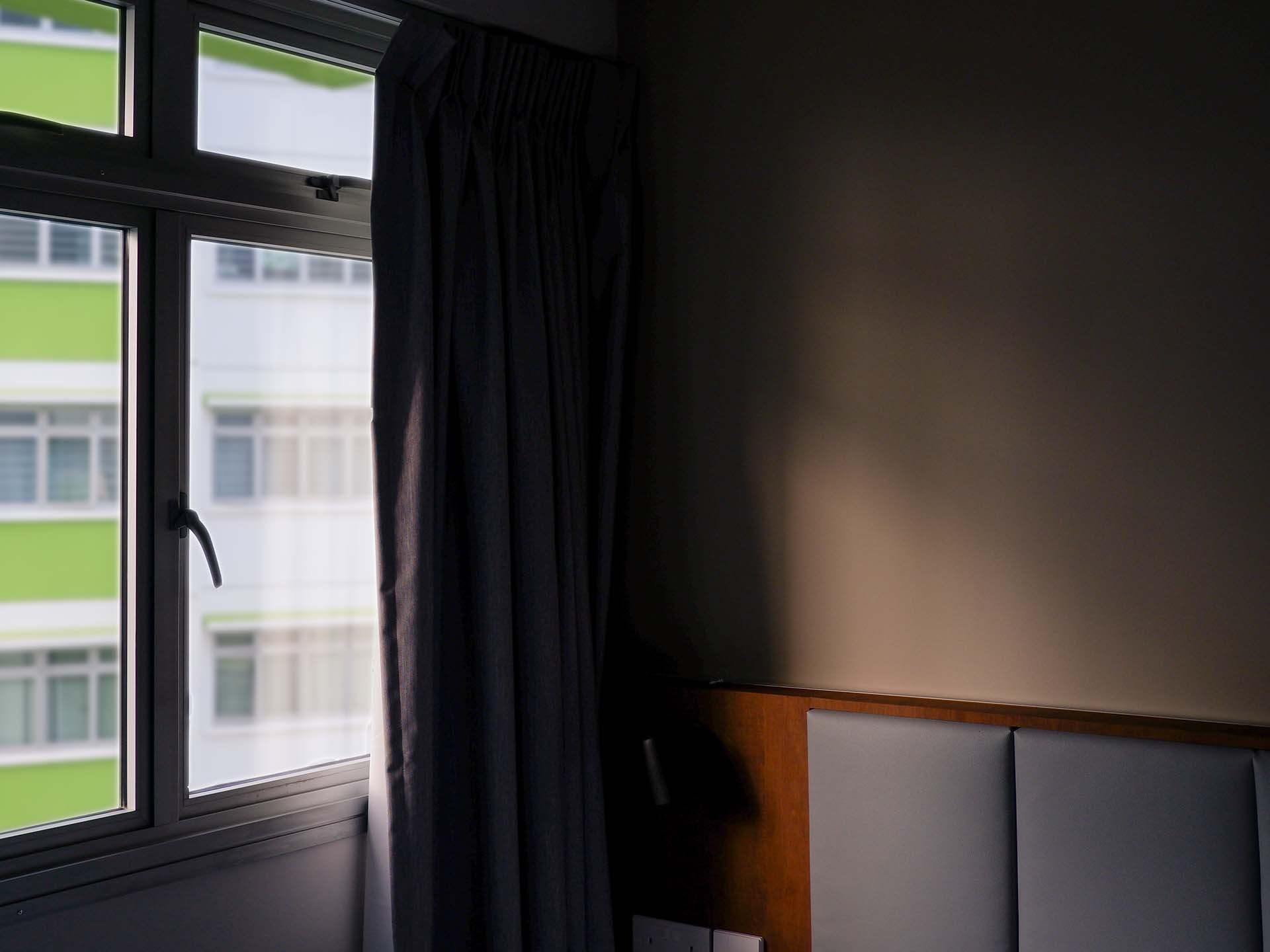
Densely woven fabric that blocks 99–100% of light through the weave. The standard night-curtain choice for Singapore bedrooms and AV rooms.
Climate Considerations
Humidity and Fabric Care
Singapore's relative humidity sits between roughly 70 and 90 percent year-round. Curtain fabrics that perform best locally are those that drape well in humid conditions and are easy to care for. Polyester and polyester blends are common choices because they resist creasing and dry quickly after washing. Heavier natural-fibre weaves can absorb moisture and take longer to dry, which matters for ground-floor units with poor ventilation.
S-Fold panels can be removed from the carriers for cleaning. Most fabrics in our range are recommended for cold gentle machine wash or dry cleaning. Frequent washing is rarely needed; in most Singapore homes, curtains are washed once or twice a year.
Sun Exposure and Fade Resistance
Singapore lies almost on the equator, so sunrise and sunset stay close to 7am and 7pm year-round, and the sun passes overhead with little seasonal variation. Direct afternoon sun on west-facing windows can be intense, and over years, lighter and cheaper fabrics may show fading along the edges of the panel that face the glass.
For west-facing rooms, our team often recommends darker fabric tones, lined fabrics, or pairing the S-Fold curtain with a roller shade behind it for added UV reduction.
Choosing S-Fold for Specific Rooms
Living Room
The most common application. S-Fold suits living rooms where the window or sliding-door span is wide and a clean, contemporary drape is wanted. A single sheer panel is often enough; layered sheer plus dimout is used when daytime glare is significant.
Master and Children's Bedrooms
Layered S-Fold (sheer plus blackout) is the standard bedroom configuration. The carrier-track system means both layers move independently and stack neatly to either side. For children's rooms, blackout matters most for daytime naps; we usually pair with a deep pelmet to seal light gaps at the top of the panel.
Dining Areas and Studies
Single-layer S-Fold in dimout is common for dining areas, where the goal is to soften daylight without darkening the room. For home offices that double as guest rooms, the same layered sheer- plus-blackout system used in bedrooms is appropriate.
Kitchen and Bathroom Windows
S-Fold is generally not recommended for kitchen or bathroom windows. The fabric is exposed to cooking moisture, oil, and steam, and the full-length drape interferes with worktops and sinks. A roller blind or zebra blind is the more practical choice in those rooms.
Installation in HDB and Condo Contexts
False Ceiling Planning
Most HDB BTO and condo renovations now include a false ceiling, often dropped by 100 to 200 millimetres along the perimeter. S-Fold tracks are typically recessed into a curtain pelmet integrated into this false ceiling. The recess depth needs to allow at least 150 millimetres for a single-track system or 200 millimetres for a double-track layered system, plus clearance for the curtain to draw back without rubbing the wall.
Decisions about pelmet depth and track placement need to happen before the false ceiling is closed up, since retrofitting a curtain recess is disruptive and usually requires re-finishing the affected ceiling section.
Wall Mounting and Pelmets
Where a false ceiling is not used, the track can be wall-mounted on brackets above the window or fitted with a surface pelmet to conceal the track. A wall-mount installation needs solid backing in the wall to support the carrier load, which is straightforward for HDB concrete walls but requires more attention for partition-walled condo units.
Power for Motorisation
Motorised S-Fold systems require a 230V power point near one end of the track. This is best installed during the renovation electrical phase rather than retrofitted later. For homes integrating the curtain with Apple Home, Google Home, or Aqara, the motor and power placement should be coordinated with the smart-home electrical plan.
When Should You Choose S-Fold Curtains?
S-Fold Over Pleated Curtains
Both S-Fold and pleated curtains create full-length drapes. S-Fold uses a continuous wave profile with no sewn-in folds and stacks more compactly when drawn open. Pleated curtains use stitched folds at the header and tend to suit more traditional or transitional interiors. S-Fold is the more common choice in newer HDB and condo renovations; pleated remains preferred where a tailored, structured finish is wanted.
S-Fold Over Roller Blinds
Roller blinds offer a cleaner, more minimal silhouette with virtually no stack-back, but they lack the visual softness of fabric drape. S-Fold is the right choice when a soft fabric presence is part of the room's aesthetic; roller blinds win on minimalism and on windows with limited surrounding wall space.
When Not to Choose S-Fold
S-Fold is less suitable for very narrow windows (under roughly 900 millimetres), where the wave profile loses definition. It is also not the right choice for kitchens, bathrooms, or any room where worktops or sinks sit directly under the window.
Read more in our guide
More on the systems and fabrics that pair with S-Fold.
Ready to visit?
- ✓Experience our fabrics – feel and see how they move in natural light.
- ✓Explore full-sized curtains and blinds in a real setting.
- ✓Try out motorized and smart systems before you decide.
- ✓Get personalised advice from our team.
- ✓Discover combinations that work for your space, lighting, and style.