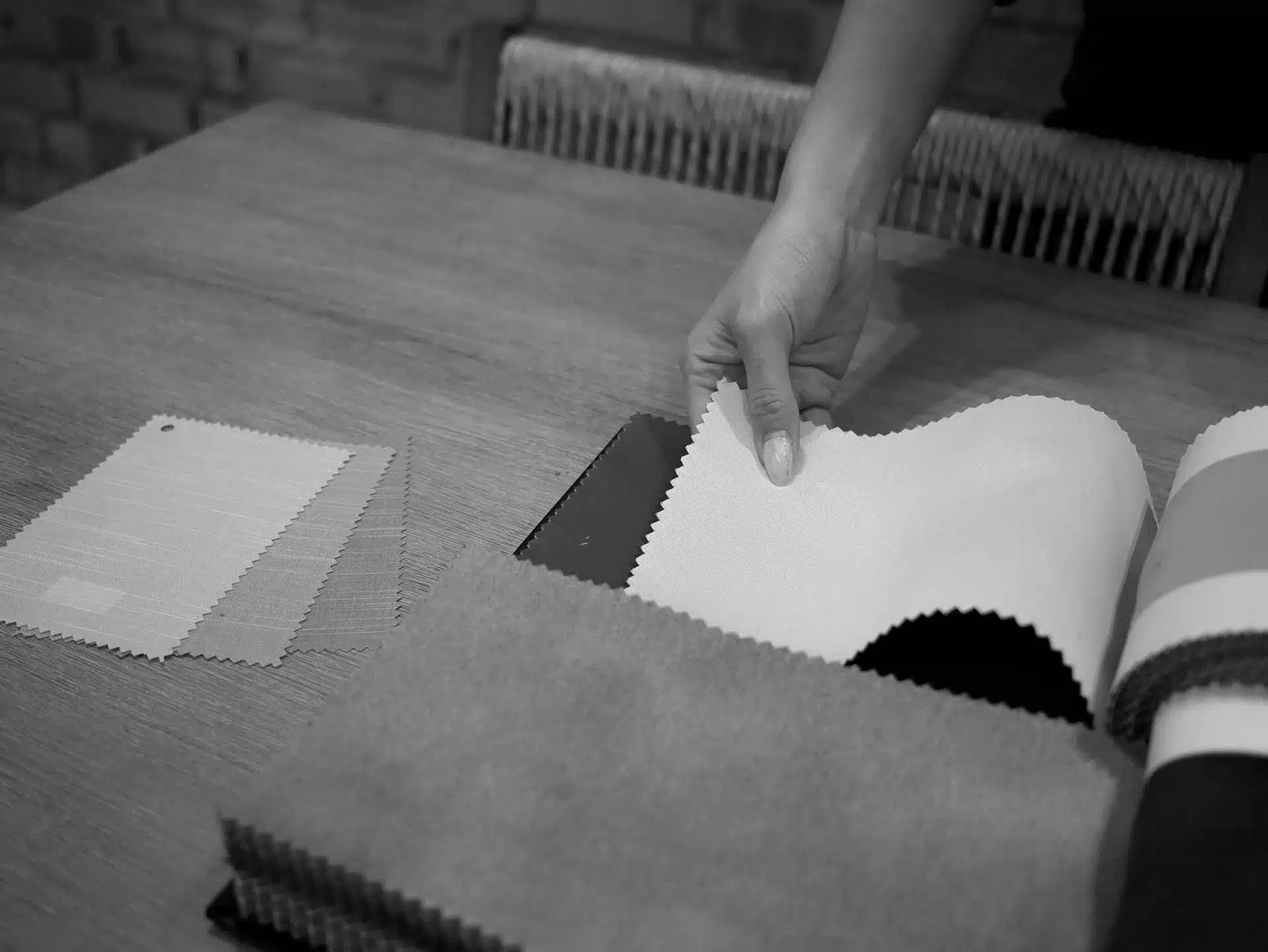
Roller Blinds
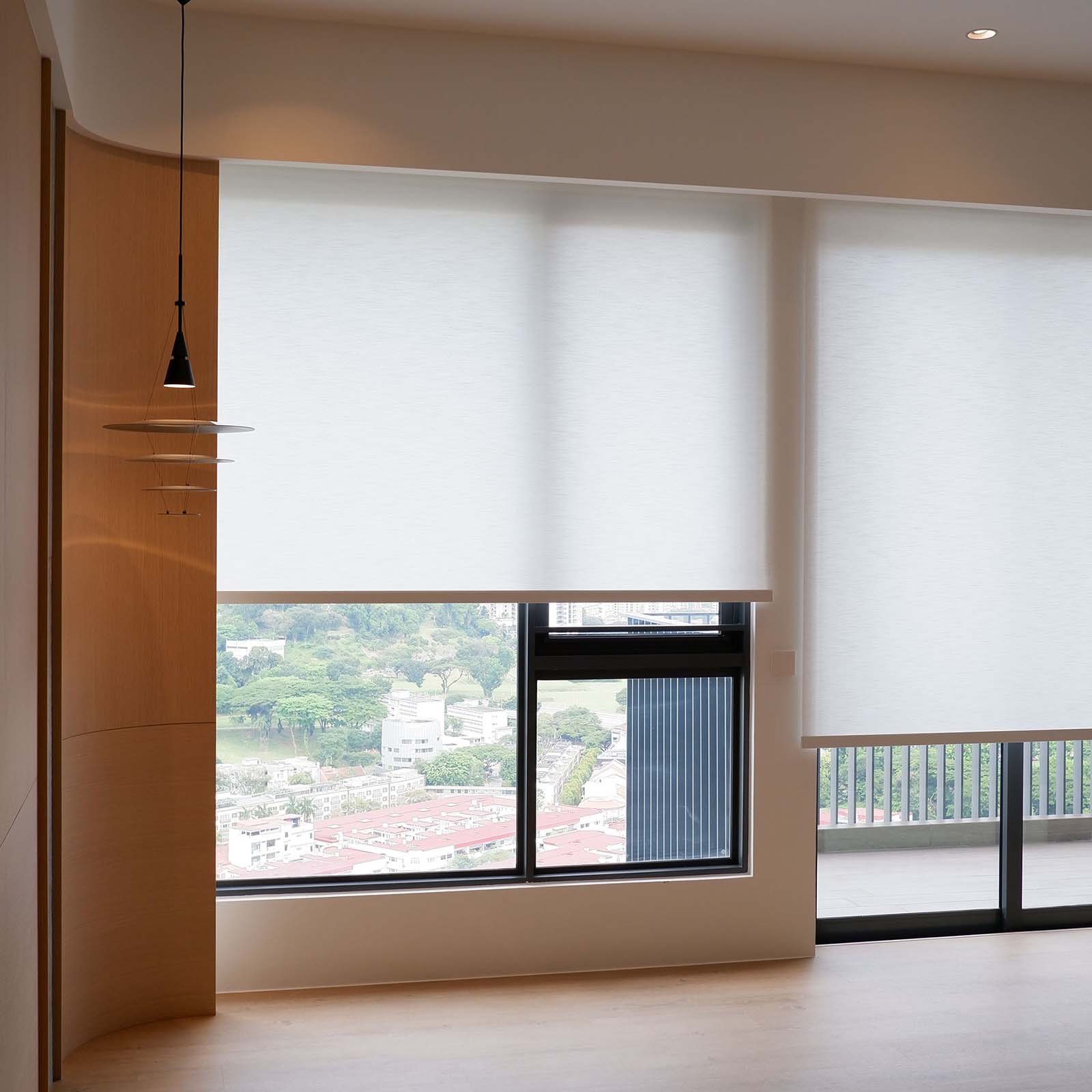
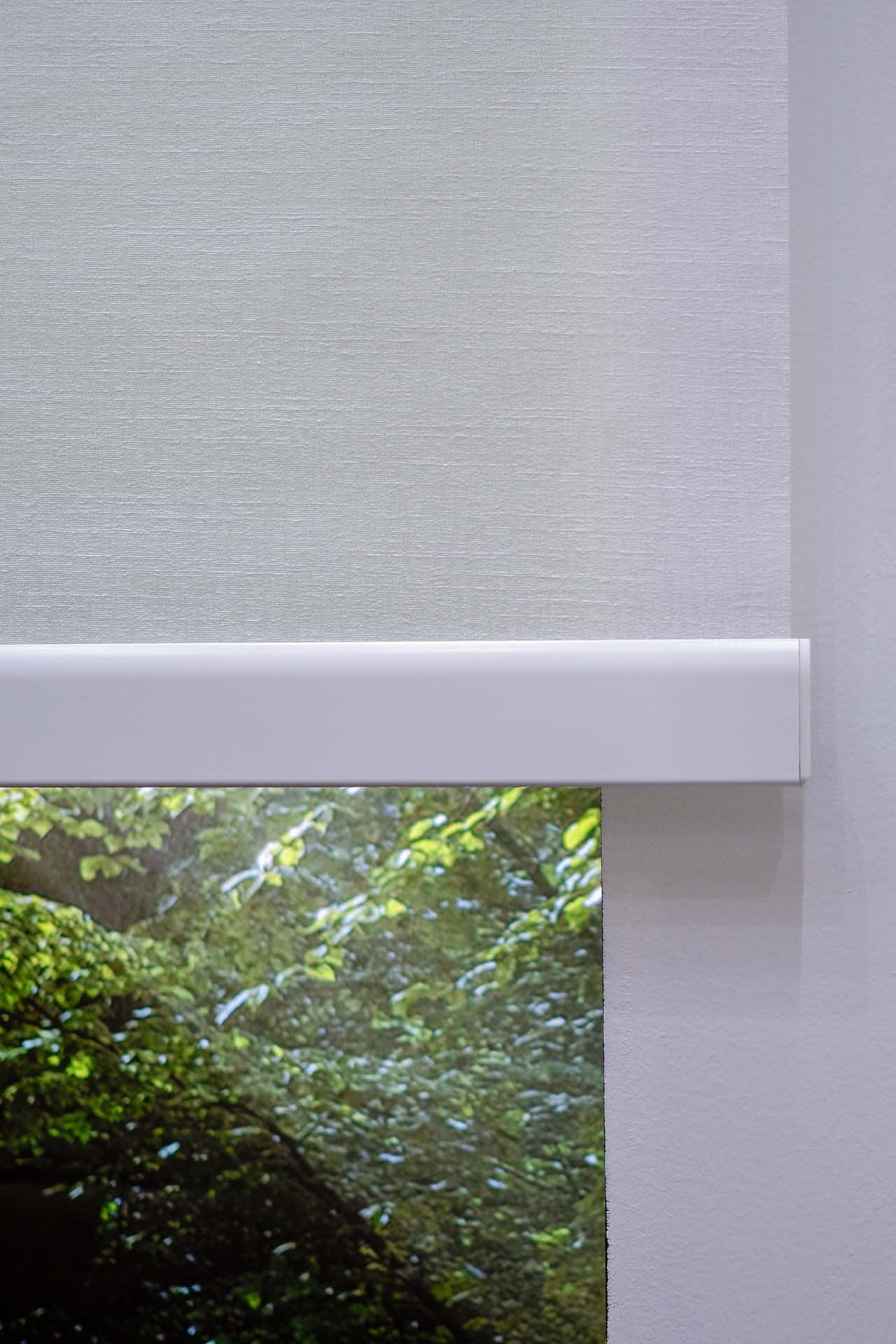
Roller Blinds use a single panel of fabric that rolls up into a compact top head rail, giving a clean, minimal silhouette when fully raised.
They sit close to the window frame, take up no horizontal space when open, and integrate well with motors and smart-home platforms. Available in three core fabric types from screen to blackout, roller blinds are one of the most versatile and practical window treatments in modern Singapore homes.
Roller blinds are also commonly referred to as roller shades.
Properties
Compact Top Head Rail
Sits close to the window frame with no stack-back when raised. Suits narrow recesses and sliding-door reveals where curtains would be too bulky.
Precise Light Control
A flat panel that lowers and raises in a continuous motion, allowing fine adjustment of how much light enters at any time of day.
Easy to Maintain
Wipe-clean fabrics, no folds to gather dust. Practical for kitchens, bathrooms, and other rooms in Singapore where humidity and cooking residue need consideration.
Motorisation-Ready
The simple roll-up mechanism integrates well with quiet motors and smart-home platforms, making roller blinds a common starting point for motorised window treatments.
Roller Blinds in Singapore Homes
Window Sizes and Recess Mounting
HDB BTO bedroom and living-room windows are typically casement or sliding aluminium types, often around 1.5 to 2.4 metres wide. Roller blinds suit both: the head rail can be installed inside the window recess for a flush, built-in look, or outside the recess for fuller window coverage. Inside-mount keeps the look minimal and is the most common HDB choice; outside-mount gives slightly better light blockage at the edges.
For wider sliding-door spans found in condo balconies, multiple blinds can be installed side by side under a shared pelmet. A single roller wider than about 2.4 metres becomes harder to operate manually and is usually motorised.
Layered with Curtains
A common Singapore setup is a sheer curtain in front and a blackout roller blind behind, both inside a shared false-ceiling pelmet. The sheer manages daytime softness, the roller takes over for full darkness. This layered approach is increasingly popular in master bedrooms and AV rooms because it combines fabric drape with the precision of a roller mechanism.
HDB Service Yards and Bathrooms
Service yard and bathroom windows are common roller-blind use cases in HDB flats. Screen or light-filtering fabric provides daytime privacy without darkening the space; the wipe-clean surface stands up to laundry humidity and bathroom condensation better than fabric curtains, which can absorb moisture and odour in poorly ventilated yards.
Fabrics
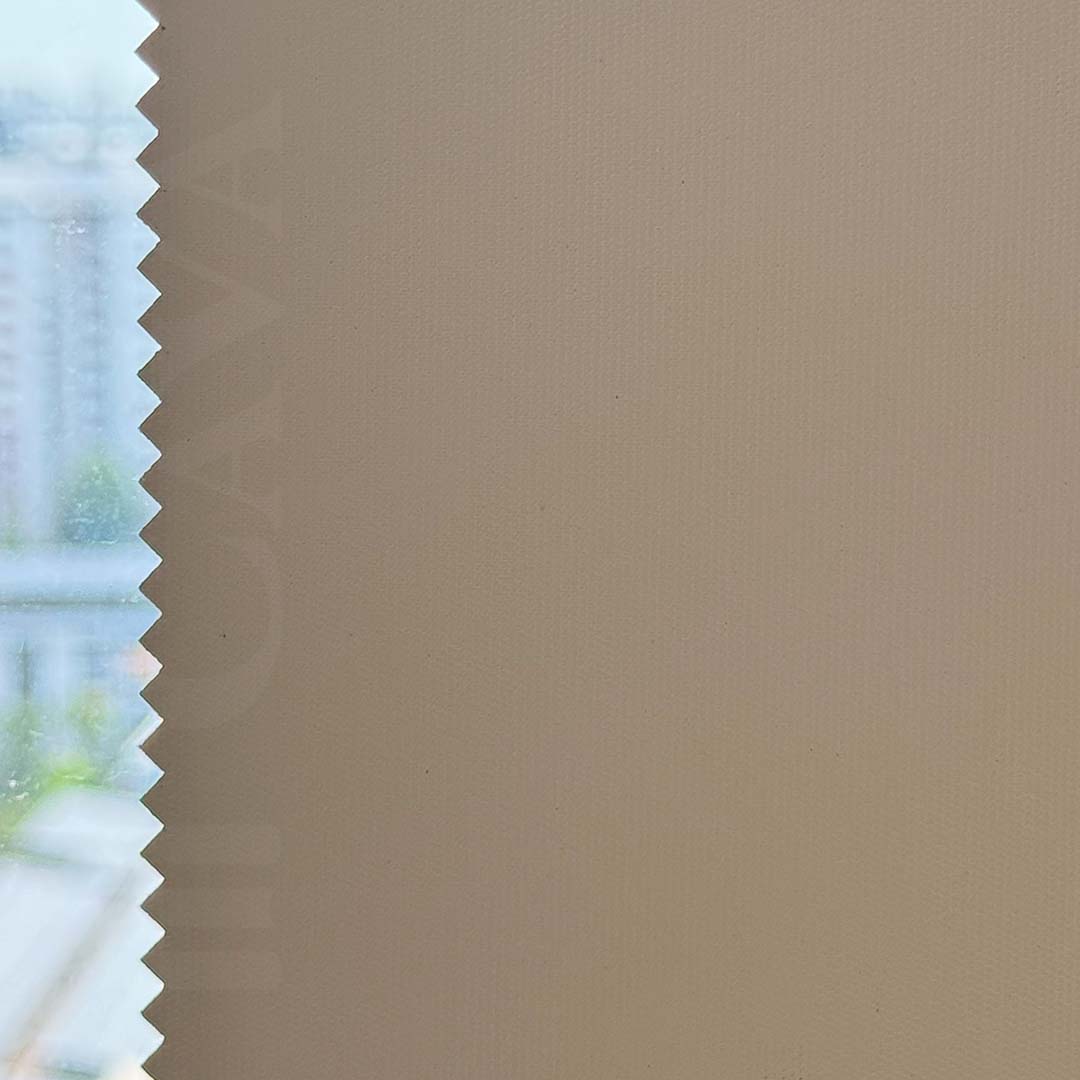
Blackout
Blocks 99–100% of light through the weave. Used for bedrooms, baby rooms, and AV rooms. Often layered behind a sheer curtain for daytime softness.
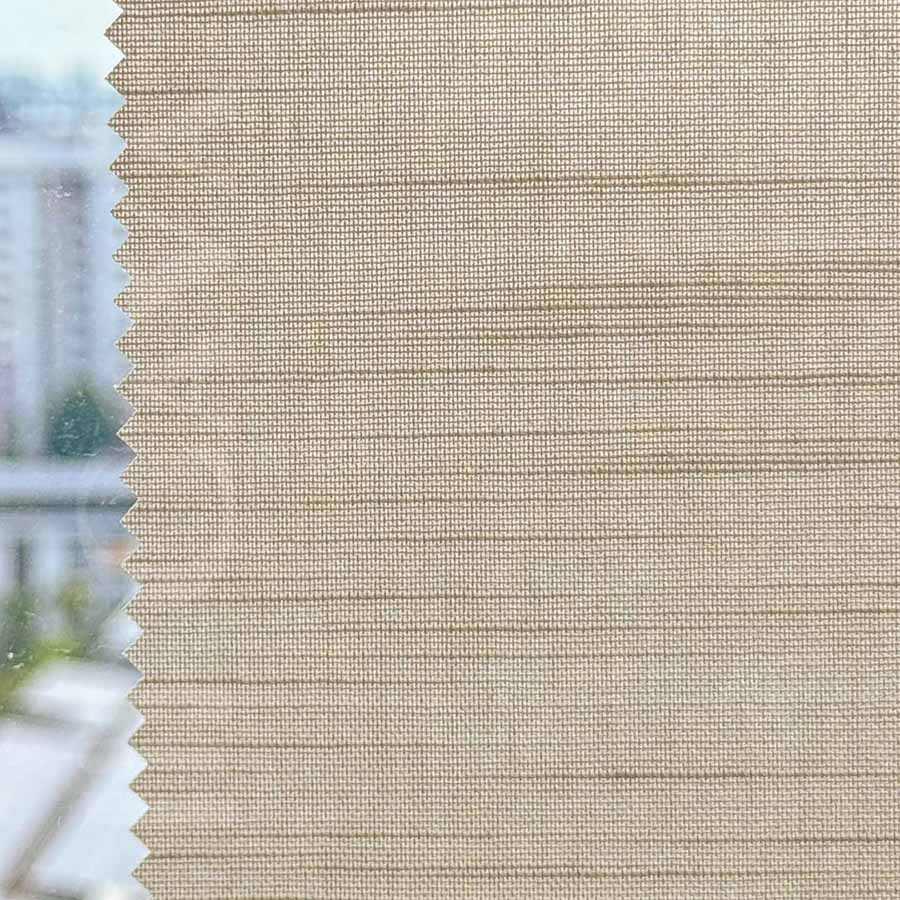
Light-filtering
Softens daylight while keeping the room bright. Diffused light without darkness. Suits living rooms, dining areas, and home offices.
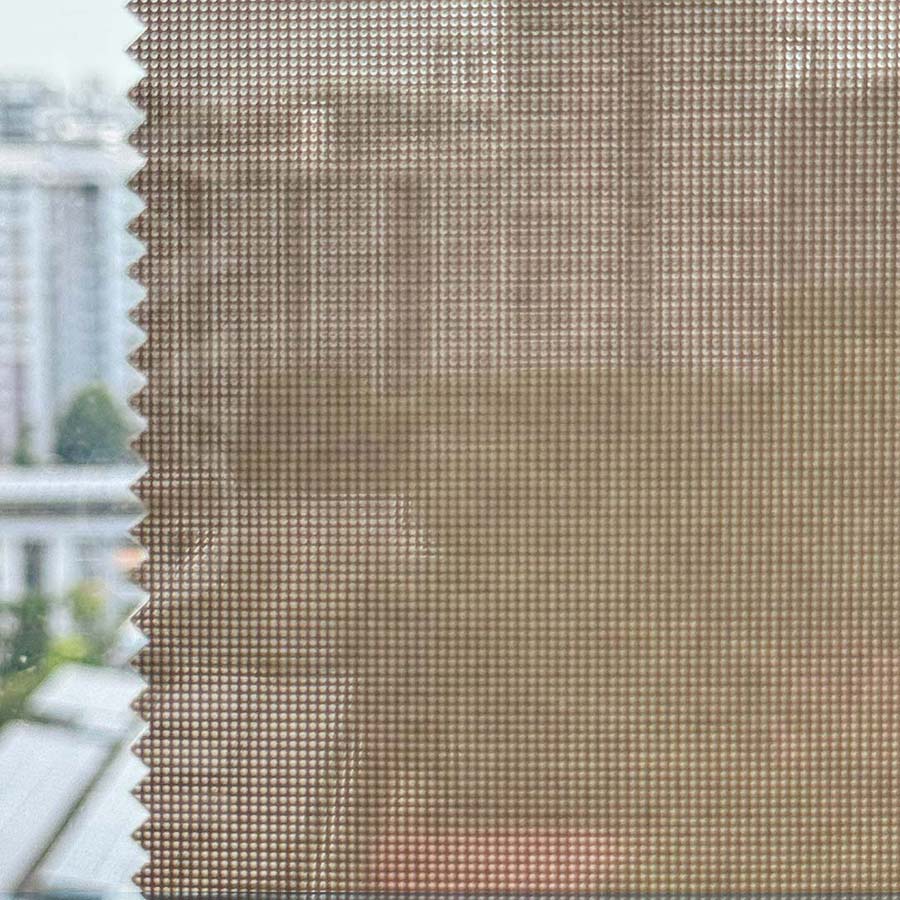
Screen
Engineered weave that reduces glare and UV transmission while preserving an outward view. Suited to rooms with strong sun exposure or scenic outlooks worth keeping.
Climate Considerations
Sun, Glare, and Heat Through Glass
Singapore lies almost on the equator, so the sun moves close to directly overhead and west-facing windows take direct afternoon sun for several hours each day. Screen-grade fabrics are engineered to reduce glare and UV transmission while preserving a view, which makes them a common choice for west-facing living rooms in condo units. Where heat is the bigger concern, blackout-grade fabric blocks sun more aggressively but cuts the view entirely.
Humidity and Fabric Wear
Roller blind fabrics in our range are coated polyester or fibreglass-based weaves engineered for high-humidity use. They resist sagging in Singapore's typical 70 to 90 percent relative humidity and do not absorb cooking moisture the way soft-textile curtains can. Routine maintenance is a wipe-down with a damp cloth; deeper cleaning happens once or twice a year.
Choosing Roller Blinds for Specific Rooms
Living Room
Light-filtering or screen fabric in a single roller is a workable standalone setup. For homes that want both fabric drape and precision light control, a sheer curtain in front of a roller blind is a popular layered configuration.
Master and Children's Bedrooms
Blackout roller blinds suit bedrooms where consistent darkness matters. The flat panel sits closer to the window than a curtain, reducing light leakage at the sides. Inside-mount works for HDB recess windows; outside-mount with a small overlap is preferred where full darkness is the priority.
Home Office and Study
Screen fabric is the default for rooms where a screen or monitor faces the window. It cuts glare without darkening the workspace and keeps an outward view, which matters for long working sessions.
Kitchen, Bathroom, and Service Yard
Wipe-clean roller blinds in screen or light-filtering fabric are the standard choice. They handle humidity and steam better than fabric curtains and do not interfere with worktops, sinks, or laundry setups.
Installation in HDB and Condo Contexts
Inside vs Outside Recess Mount
Inside-recess mounting is the cleanest visually and is the most common HDB choice. It does require a recess deep enough to clear the rolled-up fabric tube, typically around 60 to 80 millimetres. Where recess depth is shallow or full light blockage is the priority, an outside-recess mount with a small overlap onto the wall above and either side of the window is preferred.
False Ceiling and Pelmet Recesses
For roller blinds intended to disappear into a false-ceiling pelmet, a recess depth of around 100 millimetres is generally sufficient. If the roller is layered with a sheer curtain on a track in front, the combined recess needs roughly 200 millimetres to allow both to operate independently. These dimensions need to be confirmed with your interior designer before the false ceiling is closed up.
Power for Motorisation
Motorised roller blinds need a 230V power point near the head rail. Battery-powered options exist but are less common in permanent installations. For Apple Home, Google Home, or Aqara integration, the power point should be planned during the renovation electrical phase.
When Should You Choose Roller Blinds?
Roller Blinds Over Curtains
Roller blinds suit spaces where a clean, minimal appearance is wanted, where window space is limited, or where the window is in a wet or high-traffic area. They sit closer to the window than curtains and take no horizontal space when raised. Curtains still win on softness and fabric presence, which matters in living rooms and bedrooms designed around drape and texture.
Roller vs Other Blind Systems
Roller blinds are the most minimal of the blind systems. Unlike venetian or vertical blinds they use a single fabric panel, not slats or vanes. They offer one fabric and one mode, with a slim head rail and a lower cost per square metre than two-fabric alternatives.
When Roller Blinds Are Not the Best Fit
Wide standalone rollers above about 2.4 metres become hard to operate manually and can sag at the centre over time. Wide spans are usually motorised or split into two rollers under a shared pelmet. In bedrooms where a soft, fabric look is wanted, a curtain system is generally preferred over a standalone roller.
Read more in our guide
More on choosing roller fabrics, layering with curtains, and motorisation.
Ready to visit?
- ✓Experience our fabrics – feel and see how they move in natural light.
- ✓Explore full-sized curtains and blinds in a real setting.
- ✓Try out motorized and smart systems before you decide.
- ✓Get personalised advice from our team.
- ✓Discover combinations that work for your space, lighting, and style.